

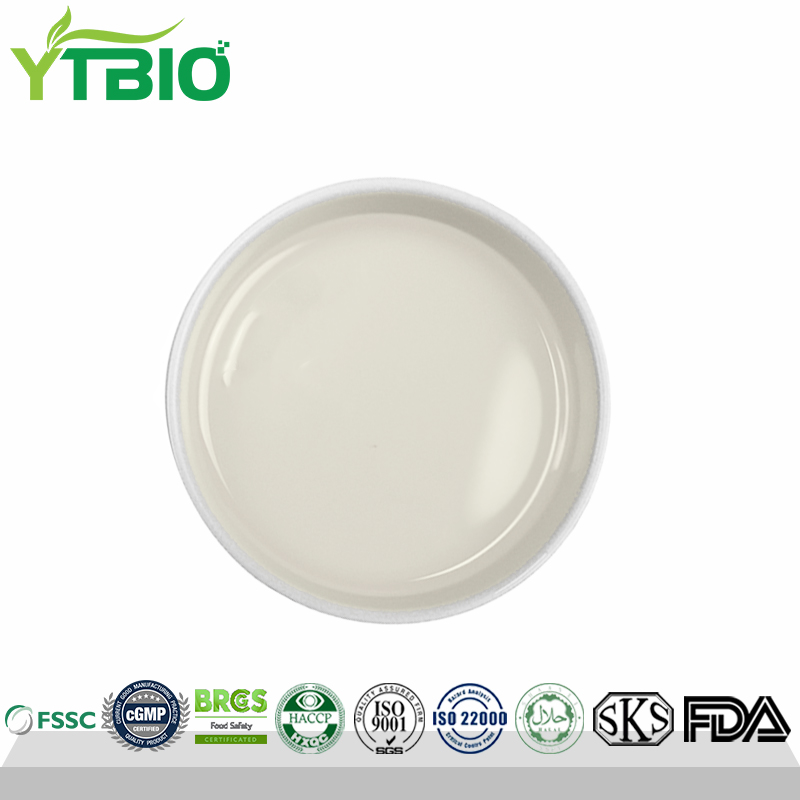
4-Terpinenol/Terpinen-4-ol Liquid
What is 4-Terpineol?
4-Terpineol is a monoterpene alcohol compound naturally found in various plants and fruits, including turpentine oil, lavender oil, nutmeg, cardamom, and rosemary. It is typically a colorless to pale yellow oily liquid, slightly soluble in water but readily soluble in alcohols and oils. Its aroma is primarily a warm, peppery scent, accompanied by subtle earthy, green, and woody notes. It can be synthesized from sabinene via hydration with dilute sulfuric acid, or from α-terpinene through photooxidation and selective hydrogenation. 4-Terpineol is widely used in the formulation of spicy fragrances and, due to its antibacterial and anti-inflammatory properties, is used in skincare products, acne and dandruff control products, and also shows research potential in pharmaceutical and insect repellent applications.
Biological Activities of 4-Terpineol
1. Anti-inflammatory effect
It reduces inflammatory responses by inhibiting the overexpression of inflammatory factors (such as TNF, IL-1, IL-8, and prostaglandin E2).
2. Antibacterial effect
It exhibits good antibacterial activity against various drug-resistant strains (including Staphylococcus aureus resistant to mupirocin, vancomycin, and methicillin).
3. Antifungal effect
It has an inhibitory effect on fungi such as Candida albicans and can enhance the antibacterial effect of antifungal drugs such as fluconazole.
4. Anti-mite effect
It can effectively kill mites by destroying their cell membrane structure and has been used in related mite-killing products.
In summary, 4-terpineol has clear effects in anti-inflammatory, antibacterial, antifungal, and antiparasitic aspects, making it a natural compound with multiple biological activities.
Application Areas of 4-Terpineol
The versatility of 4-terpineol stems from its antibacterial, anti-inflammatory, and synergistic biological activities.
In the daily chemical industry, due to its antibacterial and skin-soothing properties, it is widely used in skincare products, shower gels, and aromatherapy products, especially in formulations for treating acne, dandruff, and skin infections.
In the food industry, as a natural flavoring agent, it is mainly used to formulate spicy flavorings to enhance the flavor of condiments, meat products, and ready-to-eat foods.
In the pharmaceutical field, it is used directly as an active ingredient in drug formulations, such as creams for relieving fungal infections;
Furthermore, its antibacterial and anti-inflammatory properties provide a research basis for its application in the auxiliary treatment of respiratory diseases and in insect repellent products. In general, 4-terpineol not only has established uses in traditional daily chemical and food industries but also shows significant application prospects in the pharmaceutical field.

A production method:
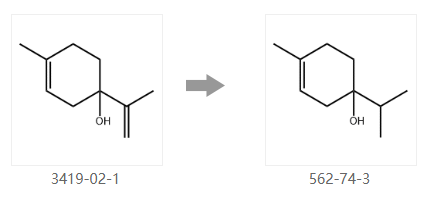
The general procedure for synthesizing 4-terpineol from 4-methyl-1-(prop-1-en-2-yl)cyclohex-3-enol is as follows: In a reaction vessel, 16.7 g of Raney nickel (water-wetted, 34% water content; 0.188 mol) is pre-treated with 5 g of water. Then 1297 g of ethyl acetate solution is added, containing 32.0 wt% limonene-4-ol (2.728 mol) and 7.1 wt% terpinene-4-ol (0.60 mol). The reactor is purged with nitrogen and hydrogen (very slow stirring speed). Then, under vigorous stirring, the reaction mixture is pressurized with 100 mbar of H2 and heated to 50°C. The temperature of the reaction mixture is maintained at 50°C under cooling conditions. The hydrogen adsorption process is completed after 5 hours. The reaction mixture is then cooled to 25°C and the pressure is released. The catalyst is removed by filtration through a filter cloth, and the remaining catalyst is washed with ethyl acetate. The filtrate and washings are combined, and the ethyl acetate is removed by vacuum distillation (distillation residue: 854.6 g). Quantitative gas chromatography analysis (GC, using internal standard method) of the distillation residue showed a terpinene-4-ol concentration of 58.5% and a limonene-4-ol concentration of 0%. This indicates that, based on the limonene-4-ol in the starting mixture (excluding the pre-existing terpinene-4-ol), the yield of terpinene-4-ol is 96.76%. Furthermore, additional terpinen-4-ol was found in the distillate (yield 1.04%). Therefore, the total yield of terpinen-4-ol (based on the limonene-4-ol in the starting mixture, not considering any pre-existing terpinen-4-ol) was 97.8%.